Production diary, October 8, 2026. This entry is still developing as we continue the image tests.
“It’s like having my very own opera company and movie studio.” That was my reaction when the possibilities began to come together. I am developing Some Words With a Mummy: A High-Voltage Swing Opera, with a libretto by Thomas Cleveland Lane and my music, based on Edgar Allan Poe’s story. The ambition is an approximately hour-long film, with a cast and world that remain recognizable from scene to scene.
At the moment, an unexpectedly large part of that ambition rests on one face: Fitz.
Casting people who do not exist
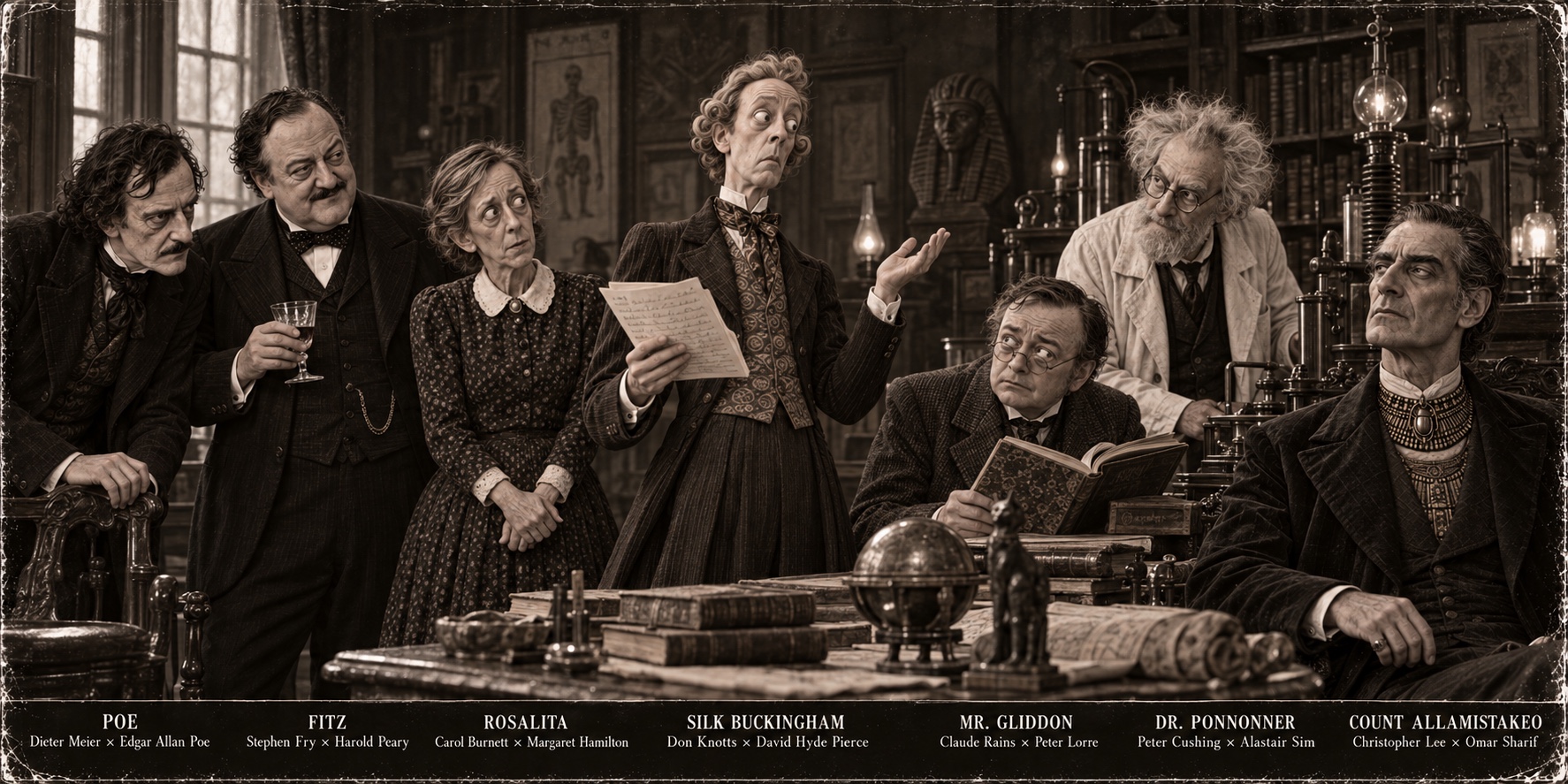
The visual work began with imaginary casting. What might happen if Dieter Meier’s severe presence met Edgar Allan Poe’s troubled face? That unsettling headshot started a process of combining familiar influences into fictional people. These were prompting ideas, not literal morphs or actual casting commitments.
For Fitz, the ingredients were Stephen Fry and Harold Peary, the Great Gildersleeve—briefly and affectionately, “the Great Gildersteve.” The result needed a broad face, comfortable bulk, receding curls, a moustache and the bearing of a man thoroughly pleased with himself. His dark checked suit and little dotted bow tie became part of his identity.
Rosalita grew from Carol Burnett and Margaret Hamilton: wiry, sharp and capable of seeing straight through her husband. Ponnonner acquired a glorious eruption of gray-white hair and an alarming enthusiasm. Gliddon became compact and bookish; the Count, elongated and regal.
Silk took more work. An early Terry-Thomas/John Cleese idea resembled the Count too much. Contact sheets and further variations eventually led to a Don Knotts/David Hyde Pierce direction: tall, pinched, high-shouldered and visibly nervous beneath his lecturer’s authority. Choosing a face was also choosing how that person might behave onstage.
A house with a memory
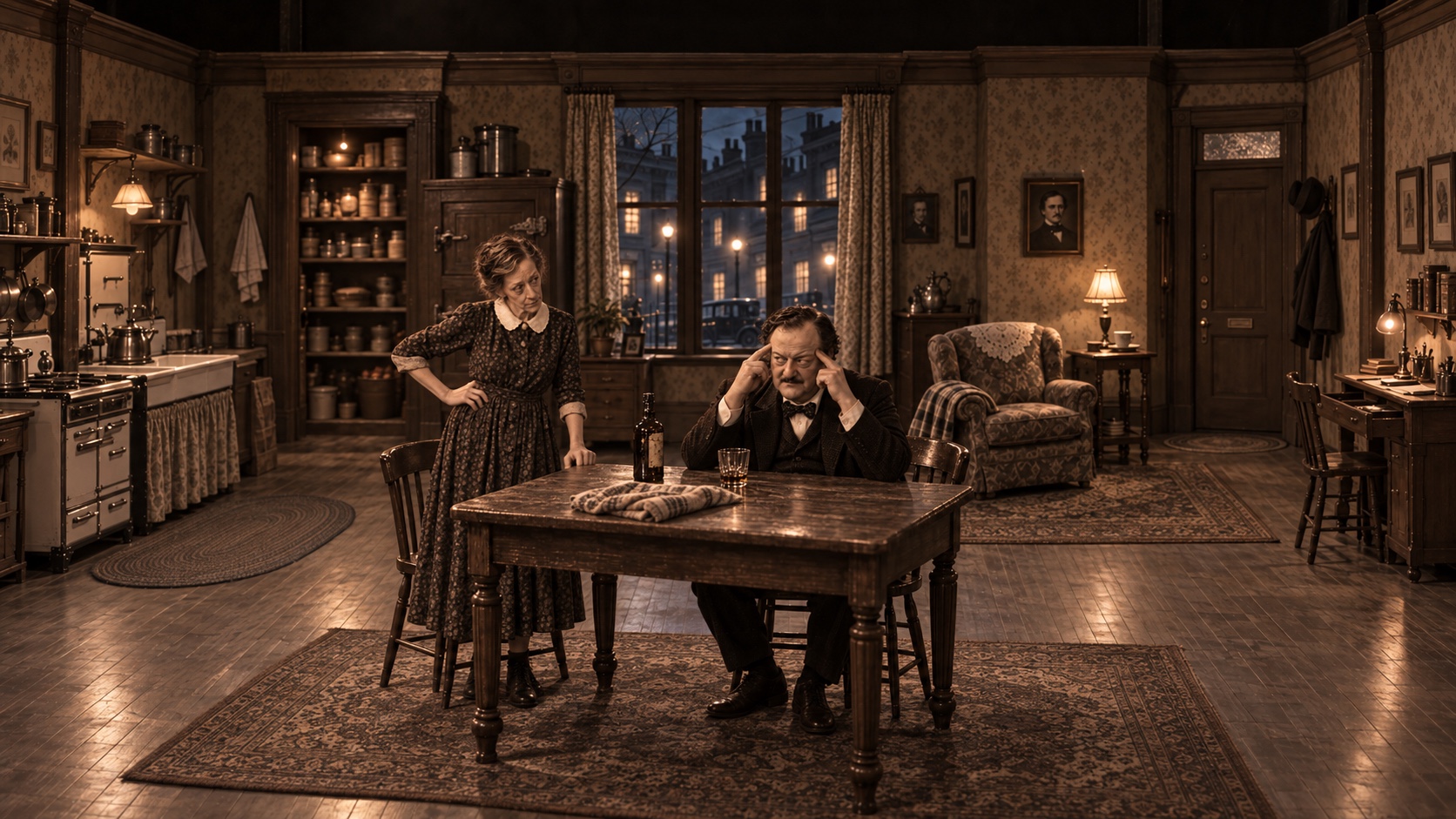
The characters needed a world worthy of them. I wanted dark Gothic atmosphere and extraordinary material detail: pores, individual hairs, cloth fibres, worn wood. But we found that making every jar and shelf equally sharp could make a room look rendered. Softening the background helped the faces feel more alive.
There were continuity mishaps along the way. The period wandered between Victorian clothes and later appliances. We settled on a 1920s direction, replaced an electric refrigerator with a wooden icebox, restored Fitz’s bow tie after it unexpectedly became a necktie, and dimmed a kitchen lamp that was stealing attention.
The house became a connected kitchen, dining room and den: amber light inside, blue night beyond the window. A wide shot establishes the room; a close-up carries the faces and texture. The annotated “locked reference” records our production standard. The words do not magically force a generator to obey.
“This is him. What we rendered is not.”
The next challenge was bringing Fitz into a local rendering workflow. My goal is to make the film on my own machines, with video of my performances as references for individual shots. Render time matters less to me than quality and consistency.
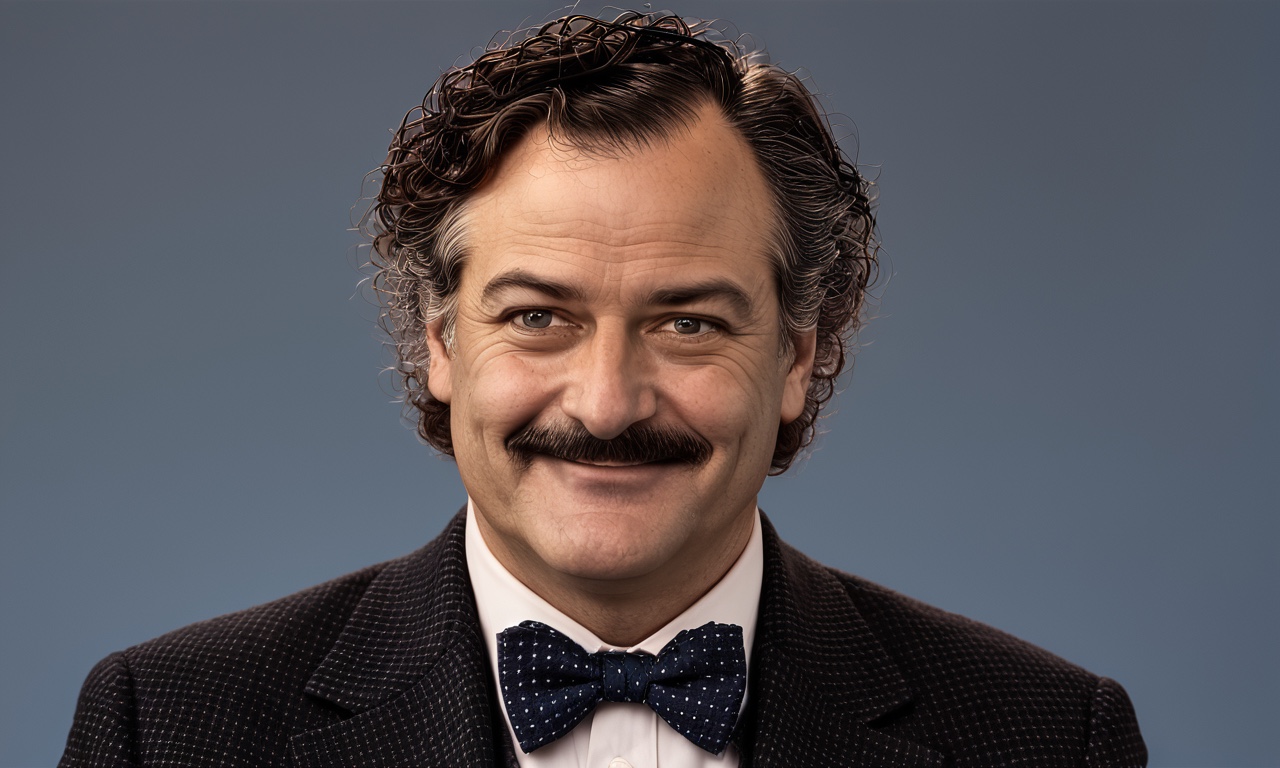
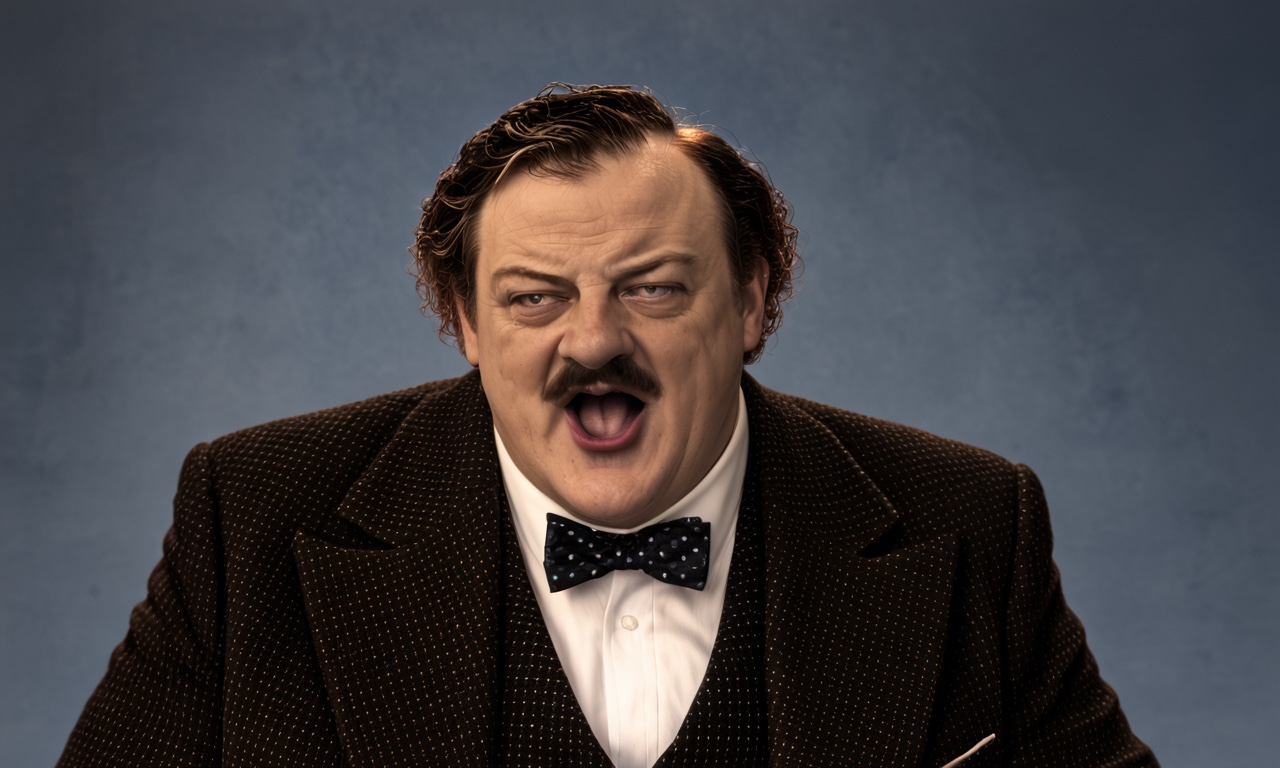
We assembled a pool of GPT-generated Fitz portraits, including anger, grief, surprise and singing. This is an opera: a beautiful closed-mouth headshot is only a beginning. Those portraits supplied the training material for a small character model called a LoRA, intended to teach the local generator who Fitz is.
The first local results were disappointing. They had curls, a moustache and something like his costume, but the man looked younger, slimmer and semi-plastic. A resemblance was not enough. I pointed to the approved portrait: “This is him. What we rendered is not.”
Approved GPT reference

Local Draw Things test
That is where our collaboration becomes most useful. Both of us look at the resulting images and ask whether they match. I bring my judgment of the character—whether this is the person I want in the opera. My AI collaborator compares features, spots artifacts, researches possible causes and sets up tests. We look again. Neither a flattering description nor a completed render counts as success.
Comparing several training checkpoints showed that the local model had learned some outward traits without fully capturing Fitz’s facial structure. Adding the approved portrait as a direct face reference made a visible difference: more age, heavier cheeks and more of his distinctive under-eye bags returned. My verdict changed to “much better—getting there.”
Fitz gets the wrong kind of glazed look
Then we noticed his eyes. The reddish rims and heavy squint made him look, as I put it, “high.” Fitz may be pompous, tired or world-weary, but that was not the expression we were trying to direct.
Stronger reference settings did not cure it. Lowering the strength did not solve it either. We tried a small local repair around the eyes rather than asking for a whole new face. The gaze became clearer, and I thought Fitz looked better. His identity is coming closer; the overall image quality still needs attention.
Approved GPT reference
Local Draw Things test
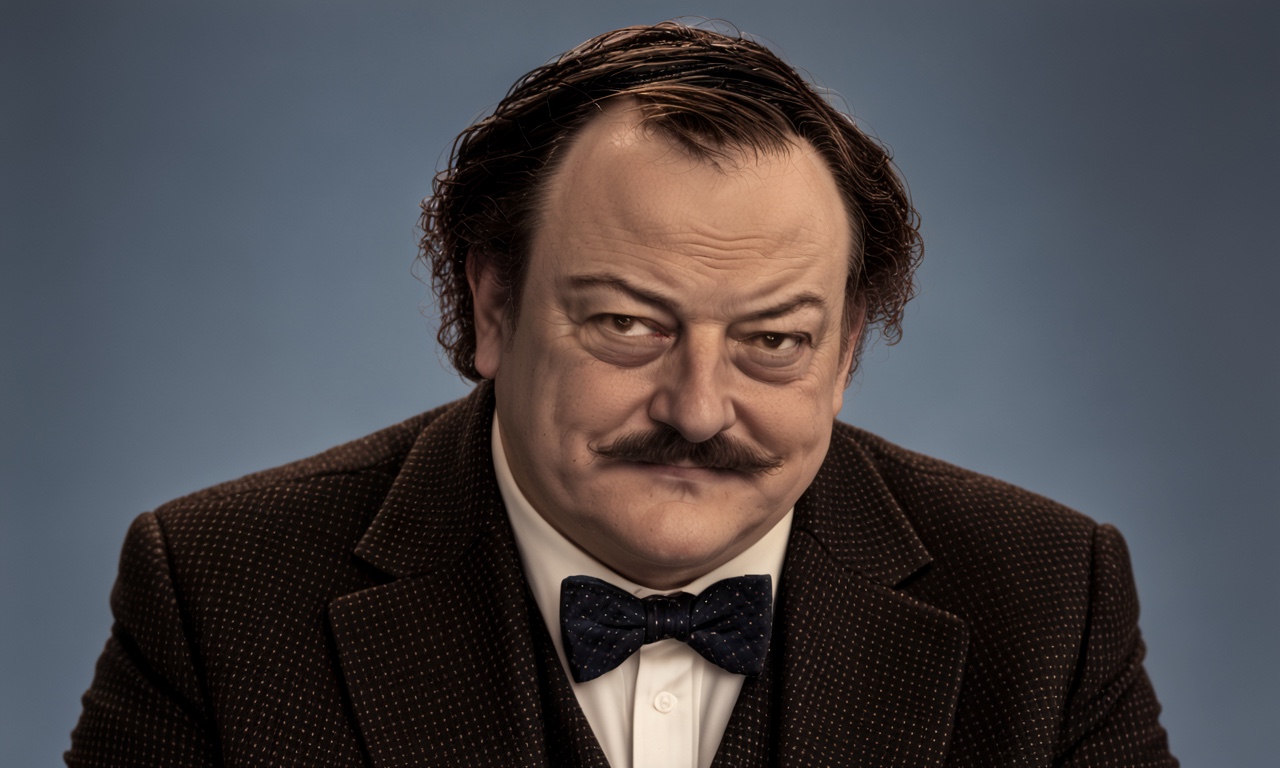
Singing produced another revealing false start. We asked for an open-mouth opera expression while supplying the smile portrait, and Fitz largely kept his mouth closed. Using one of the approved singing portraits as the reference finally gave us an open mouth. It is an encouraging still-image test, not proof that we can yet sustain his identity through a finished performance.
The company is taking shape
What excites me is the range of work this makes possible: casting, costume continuity, set design, performance experiments, visual criticism and technical problem-solving. AI has far more artistic uses than making memes. Here, it helps me pursue a very specific opera—and gives me something concrete to accept, reject or refine.
We have not solved the whole film. Likeness and image quality are related, but a recognizable face can still have poor texture or strange eyes. Each new render will be shown beside its approved reference, at the same aspect ratio, so the comparison remains honest.
For now, the company is gathering. The house has its atmosphere. Fitz is becoming recognizable. And we are still looking closely, together.
Visual development images were created with GPT image generation; the local tests shown here were rendered in Draw Things. Production: Some Words With a Mummy, A High-Voltage Swing Opera. Libretto by Thomas Cleveland Lane; music by Richard deCosta; based on the story by E. A. Poe.